Introduction
Late on Saturday night, a wave of fear rippled through downtown Milwaukee. What began as a routine evening turned into a terrifying ordeal for many, with locals describing the scene as “unreal panic” spreading almost instantly. In this report, we explore what happened, how residents are responding, and what this means for the city moving forward.
What Happened?
- According to multiple eyewitness accounts, around 10:30 p.m., the area around Riverside Theater (116 W Wisconsin Ave, Milwaukee) erupted into chaos.
- People reported hearing a sudden loud noise (described as an “explosion-like bang”), followed by shouting, mass movement of crowds, and visible fear.
- Some pedestrians described scenes of people running, lights flickering, and emergency services converging in the vicinity.
- While official authorities have not yet confirmed a cause publicly, the term “unreal panic” has been used repeatedly by locals to capture the sense of shock and disorientation.
Why the Panic Spread So Quickly
1. Crowded Environment
The downtown theatre district was heavily populated at the time, making any disturbance likely to trigger immediate reactions and mass movement.
2. Sensory Overload
Witnesses report the combination of loud sounds, sudden darkness (flickering lights), and the sound of screaming or shouting created a sensory effect that escalated fear rapidly.
3. Social Contagion
In a high-stress moment, seeing others visibly panicking (running, screaming) triggers a primal “fight-or-flight” response in others — fear spreads faster than the actual threat.
4. Lack of Immediate Information
In the absence of clear communication (what caused it, whether it was over), people assumed worst-case scenarios — making the panic worse.
The Immediate Impact
- Several people reported minor injuries (scrapes, sprains) as crowds surged. Emergency medical services were dispatched.
- Local businesses in the area temporarily shut their doors for safety and to assess the situation.
- Public transportation in the area saw delays and rerouting while authorities controlled the scene.
- Residents took to social media describing their fear and spreading the term “unreal panic” with hashtags such as #MilwaukeeShock and #UnrealPanicMKE.
What Officials Are Saying
At the time of writing, city officials and law enforcement have confirmed they are investigating the cause of the disturbance. While no official statement has confirmed a terrorist incident or major explosion, the rapid escalation of fear is under review.
Officials urge residents to remain calm, avoid spreading unverified rumors, and rely only on credible updates from the city’s emergency management department.
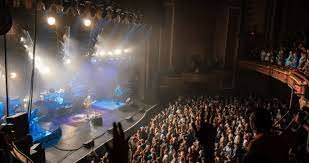
The legendary band Widespread Panic lit up Milwaukee with an unforgettable night of music, energy, and pure rock spirit. Fans filled the venue with excitement as the group delivered electrifying performances, classic hits, and soulful jams—turning the city into a celebration of sound, unity, and timeless musical passion.
How You Should Respond If You Were There
- Stay informed. Use official channels (city alerts, police Twitter feed) rather than relying solely on social media.
- Check in on others. If you were present, reach out to friends/family who were in the area. Trauma can linger even after the danger is over.
- Avoid speculation. Until authorities confirm details, unchecked rumors can add to anxiety and hamper response efforts.
- Seek help if needed. If you feel anxious, unsafe, or have been injured, contact local medical or mental-health resources.
- Be alert but not alarmed. Stay aware of your surroundings, but avoid jumping to conclusions about widespread threats without confirmation.
Why This Matters for Milwaukee
- A panic event of this nature undermines a community’s sense of safety — downtown areas depend on trust and predictability.
- If the cause is structural (infrastructure failure, accident) it may lead to changes in venue safety protocols or city policy.
- If it’s found to be intentional (though no evidence yet), the implications for public safety and event security are significant.
- For visitors and locals alike, understanding how the city handles such incidents is critical for long-term confidence.
What we Still Don’t know
- Exact cause: Was it an explosion, structural failure, false alarm, or something else?
- Complete scale of injuries/damage: Only preliminary reports exist.
- Authority confirmation: Many details are based on eyewitness accounts and have not yet been verified.
- Long-term impact: Will this trigger changes to venue safety, crowd control, or emergency response in Milwaukee?
Conclusion & Call to Action
Saturday’s events in Milwaukee underscore how quickly a seemingly normal evening can evolve into widespread panic. While the full story is still being pieced together, the experience has already left a mark on the city.
If you were in the area, please take note of your experience, check on your safety, and stay tuned for official updates. For business owners, event planners, and visitors alike, now is the time to reflect on crowd safety and preparedness.
FAQ
Q1: Was this caused by a terrorist attack?
A1: Not at this time — authorities have not decided. Investigations are underway.
Q2: Are any deaths reported?
A2: No public confirmation of fatalities as of now. Reports of injuries are preliminary.
Q3: Should I avoid downtown Milwaukee right now?
A3: The area is accessible; however, people in the immediate zone may still see disruptions. Stay alert to traffic updates and public transit notices.
Q4: How can businesses help reassure customers post-incident?
A4: Transparent communication, visible safety protocols, and staff prepared for emergencies help rebuild trust.
Q5: Where can I get official updates?
A5: Check the city of Milwaukee’s official website, the Milwaukee Police Department’s social media, or local media outlets for live alerts.
Meta Description: OpenAI’s generative-music tool could let anyone turn text or audio into full compositions—discover how this is reshaping songwriting, the industry, and creative roles.