Introduction
The praying mantis has long fascinated people with its unique hunting style, graceful posture, and spiritual symbolism. Many believe it brings luck or represents patience and calmness. However, an increasingly common question in 2025 is: “Are praying mantises a protected species?”
- Introduction
- Understanding the Praying Mantis
- Are Praying Mantises Protected in 2025?
- Why the Misconception Exists
- Conservation Facts About Praying Mantises
- Ecological Importance of the Praying Mantis
- Praying Mantis Species at Risk
- How to Help Conserve Praying Mantises
- Global Perspective on Insect Conservation
- Cultural and Spiritual Significance
- Conclusion
- FAQ;
This article explores the truth behind that question, uncovering the conservation status, environmental role, and global protection laws connected to these remarkable insects. We’ll also look at common myths, current ecological concerns, and the reasons why conserving mantises remains important for biodiversity.
Understanding the Praying Mantis
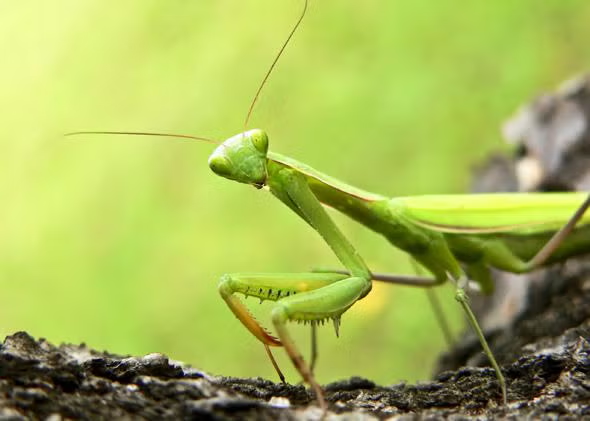
Praying mantises belong to the order Mantodea, a group of around 2,400 species found across the world. Their name comes from their distinctive front legs, which are bent and held together as though in prayer.
These insects are predatory, feeding mainly on other insects such as flies, crickets, moths, and even small reptiles. Because of this, they play an important role in natural pest control. Gardeners and farmers often welcome mantises since they help maintain a healthy balance in the ecosystem.
Are Praying Mantises Protected in 2025?
Contrary to a long-standing myth, praying mantises are a Protected Species in 2025 by law in most countries, including the United States, India, and many European nations. The rumor that killing one is illegal has circulated for decades, but it’s simply not true.
As of 2025, no federal or international law lists mantises as endangered or protected. They are not included in the Endangered Species Act (ESA) of the United States or on the IUCN Red List of Threatened Species.
However, some local regulations or conservation groups may advocate for environmental protection of mantis habitats, especially in regions where their populations are declining due to pesticide use, habitat loss, or climate change.
Why the Misconception Exists
The myth that killing a praying mantis is illegal dates back several decades. People were so captivated by its spiritual image and helpful pest-control behavior that they began spreading stories of legal protection. Over time, this myth became accepted as fact.
While no law directly protects mantises, they still deserve ethical respect. Their population health directly influences the biodiversity of gardens, forests, and farms. So while you won’t face fines or penalties for harming one, you may harm the ecological balance in your area.
Conservation Facts About Praying Mantises
Though not legally protected, mantises face challenges that make conservation important. Here are some key facts:
- Habitat Loss – Deforestation and urban development reduce the natural grasslands and shrubs where mantises hunt and lay eggs.
- Pesticide Use – Agricultural chemicals kill both pests and beneficial predators like mantises, disrupting the food chain.
- Climate Change – Temperature changes can affect their reproductive cycles and the survival of their egg cases (ootheca).
- Invasive Species – Introduction of non-native mantis species can threaten local populations by competition and interbreeding.
In short, while mantises are not “endangered,” they do benefit from eco-friendly farming, organic gardening, and conservation practices.
Ecological Importance of the Praying Mantis
Mantises are natural predators that help keep harmful insect populations in check. A single mantis can eat dozens of flies, mosquitoes, and aphids in one day. This makes them valuable allies in maintaining sustainable agriculture without heavy reliance on chemicals.
Their presence indicates a healthy ecosystem — one rich in insect diversity and low in artificial interference. Because mantises are both predators and prey, they also support other wildlife such as birds, frogs, and lizards that feed on them.
Praying Mantis Species at Risk
Although the overall mantis population remains stable globally, certain regional species face threats. For example:
- In parts of Southeast Asia, deforestation and pollution are reducing native mantis habitats.
- In Europe, agricultural expansion and pesticide exposure have lowered sightings of several local species.
- In North America, imported species like the Chinese mantis sometimes compete with native ones.
If environmental damage continues, these local populations could eventually become vulnerable. Therefore, monitoring and documenting mantis numbers are key parts of biodiversity research.
How to Help Conserve Praying Mantises
You don’t need to be a scientist to contribute to mantis conservation. Simple lifestyle choices can make a big difference:
- Avoid chemical pesticides in your garden — use natural insect repellents or companion planting instead.
- Plant native vegetation to attract insects and give mantises a safe habitat.
- Leave egg cases (oothecae) undisturbed during winter; these hatch into new mantises in spring.
- Encourage community education about beneficial insects.
- Support organic farming initiatives that protect local ecosystems.
By doing these small acts, you help maintain an environment where praying mantises thrive naturally.
Global Perspective on Insect Conservation
While mantises themselves are not officially endangered, the decline of insects worldwide has become a serious issue. Scientists warn that nearly 40% of insect species globally could face population declines this century.
This includes pollinators like bees and butterflies, as well as predators like mantises. Factors such as habitat destruction, light pollution, and chemical runoff contribute to these losses. Conserving mantises is therefore part of the larger mission to preserve insect diversity and ecosystem stability.
Cultural and Spiritual Significance
In many cultures, the praying mantis is seen as a symbol of mindfulness, patience, and intuition. Ancient Chinese and African traditions regarded the mantis as a spiritual guide, while in Japan, it symbolized bravery and calm determination.
Today, people still associate mantises with focus and inner peace. This cultural appreciation helps raise awareness about their importance in the natural world, adding an emotional layer to their scientific value.
Conclusion
So, are praying mantises a protected species in 2025? The simple answer is no, not legally — but they deserve our protection nonetheless. These incredible insects are vital players in the ecosystem, acting as natural pest controllers and indicators of environmental health.
Through responsible gardening, reduced pesticide use, and public education, we can ensure that mantises continue to thrive in our backyards, forests, and farmlands.
FAQ;
Q1: Are praying mantises considered a protected species in 2025?
In most regions, praying mantises are not classified as a protected species.
Q2: Which species of praying mantis are protected, if any?
Some rare or endangered mantis species may have local protections depending on the country.
Q3: Can I legally collect or keep praying mantises in 2025?
Generally, yes — collecting common species is allowed, but always check local regulations.
Q4: Why are praying mantises sometimes given protected status?
Protection may be given to preserve biodiversity and prevent the decline of rare species.
Q5: How can I ensure I’m following laws regarding praying mantises?
Consult local wildlife authorities or conservation lists before capturing or trading them.