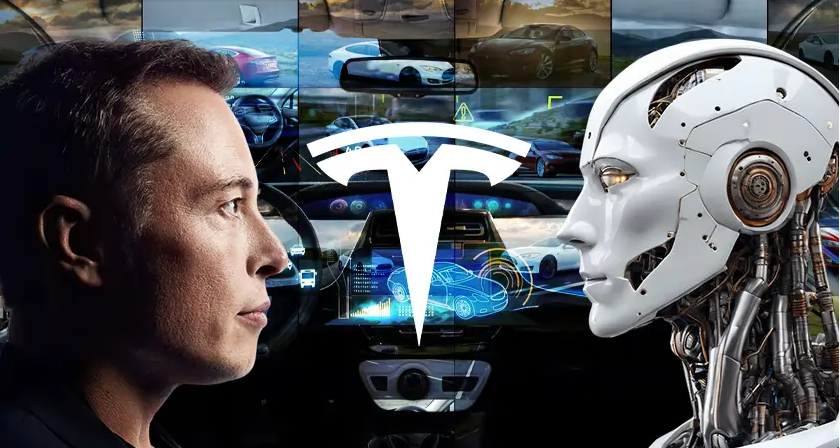
In the fast-paced world of innovation, Tesla has consistently remained a symbol of technological advancement and futuristic vision. From electric vehicles to energy solutions, the company has redefined how technology integrates with sustainability. Now, with the emergence of Tesla Cortex, the brand is once again pushing the boundaries of intelligent mobility. This groundbreaking development marks a significant leap in artificial intelligence, autonomous driving, and neural integration, shaping the next era of smart transportation.
Tesla Cortex uses a deep integration of artificial intelligence, sensor fusion, and predictive computation to create vehicles capable of human-like awareness. It interprets environmental cues such as road texture, weather patterns, and driver behavior to make instant, informed decisions. This allows Tesla cars to respond naturally to real-world conditions, setting a new benchmark for smart mobility.
Moreover, the system’s continuous data learning framework ensures that every mile driven enhances its intelligence. Tesla Cortex learns from collective driving experiences across the globe, building a unified brain for the entire fleet. With every update, the vehicles become sharper, more responsive, and increasingly autonomous.
What is Tesla Cortex?
Tesla Cortex is believed to be Tesla’s next-generation artificial intelligence platform designed to power advanced autonomy and vehicle intelligence. Inspired by the human brain’s cerebral cortex, this technology aims to create vehicles that don’t just drive but think, learn, and adapt to their surroundings. By combining decision-making, real-time data analysis, and deep learning algorithms, Tesla Cortex takes self-driving technology to a new dimension, one that mimics human perception and intuition. As technology continues to accelerate, Tesla Cortex is emerging as a symbol of next-generation innovation in mobility.
A Fusion of Human Intelligence and Machine Learning
At the heart of Tesla Cortex lies a powerful neural network capable of processing immense volumes of sensory data. Using an array of cameras, ultrasonic sensors, and radar systems, the Cortex continuously interprets road conditions, traffic behavior, and environmental cues. Unlike traditional systems that rely solely on pre-programmed responses, Tesla Cortex evolves over time, learning from billions of miles driven by Tesla vehicles worldwide.
This fusion of machine learning and human-inspired logic enables the system to anticipate situations rather than just react. For example, Tesla Cortex can detect unpredictable pedestrian behavior, adjust speed intelligently, and even predict potential hazards before they appear. This proactive intelligence represents the core of what Tesla envisions as “human-level autonomy.”
Redefining the Driving Experience
With Tesla Cortex, driving becomes more than a mechanical process; it becomes an intelligent partnership between human and machine. Drivers will benefit from seamless communication with their vehicles, enhanced safety features, and adaptive driving modes that adjust to personal habits. Imagine a Tesla that knows your preferred routes, music choices, and even your mood, automatically optimizing the cabin environment for comfort and efficiency.
Furthermore, Tesla Cortex integrates advanced predictive analytics, enabling vehicles to make smarter energy and navigation decisions. This means improved battery performance, optimized charging routes, and smoother driving experiences, all powered by a self-evolving system that learns continuously from the Tesla ecosystem.
The Role of Data and Connectivity
Tesla’s massive fleet acts as a living neural network. Every Tesla vehicle on the road contributes to the Cortex database, sending anonymized data that helps refine the algorithms and decision-making patterns. This data-driven learning cycle ensures that each update makes the system smarter, safer, and more efficient.
Through Tesla’s global cloud infrastructure, the Cortex platform communicates in real-time, sharing insights across the network. This collective intelligence allows Tesla vehicles to learn from one another, a concept that puts Tesla far ahead of competitors still relying on isolated models. Unlike traditional, Tesla Cortex goes beyond automation; it represents the evolution of cognitive intelligence within vehicles
Impact on the Future of Transportation
The introduction of Tesla Cortex could mark a major milestone in the evolution of mobility. By combining driven cognition with sustainable electric power, Tesla is paving the way for cities that operate with minimal accidents, reduced congestion, and enhanced environmental harmony.
Autonomous taxis, logistics fleets, and even smart city transportation grids could benefit from Tesla Cortex technology. Its adaptive intelligence could make traffic management more efficient, reduce emissions, and ultimately contribute to cleaner, smarter urban environments.
This system doesn’t just execute commands; it comprehends context, analyzes situations, and adapts in real time to ensure the safest and most efficient driving possible.
Challenges and Future Prospects
Despite its enormous potential, Tesla Cortex faces challenges in regulatory approval, ethical concerns, and data privacy. Autonomous driving systems must meet strict safety protocols, and the integration of neural-level decision-making raises new questions about accountability and transparency.
However, Tesla’s track record of overcoming technological and industry challenges suggests that the company is well-positioned to lead this transformation. As Tesla Cortex evolves, it could redefine not only how we drive but how we think about transportation itself.
Adaptive cognition, neural synergy, quantum processing, sensory intelligence, predictive navigation, eco-autonomy, data fusion, hyperlearning, cognitive mobility, algorithmic evolution.
Conclusion
Tesla Cortex represents the next frontier in intelligent mobility, a system that merges the precision of technology with the intuition of the human mind. By bridging data and sustainable design, Tesla is once again shaping the roadmap to the future. In an age where innovation defines progress, Tesla Cortex stands as a symbol of human creativity and machine intelligence working together to revolutionize how the world moves.
Ultimately, Tesla Cortex isn’t just an upgrade; it’s the foundation for a new era of transportation, where vehicles understand, predict, and evolve alongside the humans who drive them.
FAQs
1 . What is Tesla Cortex?
Tesla Cortex is Tesla’s advanced platform designed to power intelligent and adaptive vehicle autonomy.
2 . How does Tesla Cortex improve driving safety?
It learns from real-world data to predict hazards and make smarter, faster driving decisions.
3 . Is Tesla Cortex based on artificial intelligence?
Yes, it uses deep neural networks inspired by the human brain’s cortex for intelligent processing.
4 . Can Tesla Cortex update itself over time?
Absolutely, it continuously evolves through over-the-air updates and global fleet learning.
5 . Why is Tesla Cortex considered the future of mobility?
Because it merges sustainability and real-time learning to create truly intelligent transportation.